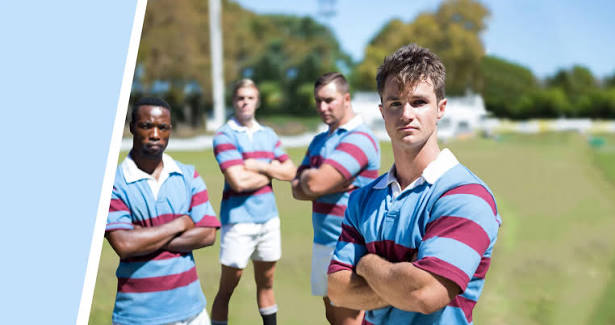
Hong Kong amateur football runs on commitment. Teams train after work, book pitches at 10pm, and argue about fees in WhatsApp groups. Yet the one thing that often gets left until the last minute is kit. A club secretary will message a supplier three weeks before the season opener asking for custom sports uniforms and custom soccer jerseys, then act surprised when the reply says eight weeks. This guide is for those teams. It is not a brochure for any single supplier. It is a practical walkthrough of what custom sports uniforms and custom soccer jerseys actually involve in Hong Kong, from fabric choice to minimum order quantities, so your team looks sharp and your treasurer does not have a small heart attack.
Why Off-the-Shelf Kits Keep Failing Hong Kong Teams
Walk into any sports shop in Mong Kok and you will find racks of standard-sized jerseys. They look fine on the hanger. Then you get them onto a squad of twenty players who range from a 55kg winger to a 95kg centre-back, and suddenly half the team is swimming in fabric while the other half cannot lift their arms. Custom sports uniforms solve a problem that off-the-shelf kit creates: the assumption that every body is the same shape. For school teams, the mismatch is even more visible. A Form 1 student and a Form 6 student might wear the same house colour, but they do not share a body type. Custom soccer jerseys cut to a proper size chart, with options for slim, regular, and relaxed fits, are not a luxury. They are the difference between a player feeling like part of the team and feeling like they borrowed someone else’s clothes.
The Hong Kong Weather Is Your First Design Brief
Any supplier who talks to you about custom sports uniforms without asking about the season is not listening. Hong Kong’s summer league runs through temperatures that hit 33°C with humidity that makes the air feel like a warm towel. A heavy cotton-poly blend might look sturdy on a spec sheet, but it will trap heat and turn a Sunday match into a survival exercise. Good custom soccer jerseys for Hong Kong need moisture-wicking polyester, a lightweight mesh panel under the arms, and a cut that allows air to move. Custom sports uniforms for sports like basketball or netball have the same requirement: breathability is not a marketing word, it is a performance feature. If you are ordering kit in March for a June tournament, ask the supplier to show you the fabric weight in grams per square metre. Anything above 150gsm for a summer jersey should come with a very good explanation.
Design Details That Separate a Good Kit from a Great One
The design phase is where custom sports uniforms can go wrong in small, expensive ways. A logo that looks sharp on a laptop screen can turn into a muddy blob when printed on dark fabric. A colour that matches your club crest on a Pantone chart can arrive two shades lighter because the fabric absorbs dye differently. Custom soccer jerseys have an additional challenge: the number on the back needs to be readable from thirty metres away, which means contrast matters more than style. A navy number on a black jersey might look sleek in a mock-up, but the referee will not be impressed when they cannot identify a player. The best custom sports uniforms suppliers in Hong Kong will send you a physical colour swatch and a printed sample before bulk production, and they will not roll their eyes when you ask for it.
Local Suppliers vs Overseas Factories: What Actually Matters
Hong Kong teams often compare quotes from a local custom sports uniforms supplier against an overseas factory found through an online marketplace. The overseas quote is almost always cheaper per unit. It is also almost always slower, and the gap between “cheap” and “cheap enough to be worth the risk” is where teams get burned. A local supplier who handles custom soccer jerseys can meet you in a café in Jordan, show you fabric samples, and fix a sizing error in days rather than weeks. An overseas factory might offer a lower unit price, but if the shirts arrive with the wrong shade of red three days before your first match, the savings evaporate. For custom sports uniforms that need to be reordered mid-season because a player joined late, the local supplier’s ability to run a small repeat order is often worth more than the initial discount.
Minimum Order Quantities: The Question Every Team Asks
The first question most Hong Kong teams ask about custom sports uniforms is “what is your minimum order?” The answer varies wildly. Some suppliers will produce ten custom soccer jerseys; others will not start a production run below thirty. For a small club with two teams, a minimum of thirty is manageable. For a five-a-side team that just wants a nice kit for a weekend league, it is a barrier. The workaround is to order a few extra sizes and treat them as spares, or to combine your order with another team from the same club. What you should not do is accept a supplier who says “minimum thirty” and then quietly charges you for thirty when you only needed fifteen. Custom sports uniforms should be priced transparently, with the minimum quantity stated upfront and any surcharge for small runs explained before you pay a deposit.
Sampling and Sizing: The Step Most Teams Skip
If there is one step that separates a smooth custom soccer jerseys order from a disaster, it is the sample. A good supplier will produce a single sample shirt in your chosen fabric, colour, and print before running the full order. This is your chance to check three things: whether the colour matches your club identity, whether the sizing chart is accurate, and whether the print survives a wash. Custom sports uniforms for school teams should always go through a sample stage, because a PE teacher ordering for six different year groups needs to see how a size 28 compares to a size 34 on an actual student. Skipping the sample to save two weeks is the most common reason teams end up with kit they quietly dislike but wear anyway.
Printing Methods: Heat Transfer, Sublimation, and Embroidery
The method used to put your logo and numbers onto custom sports uniforms affects how the kit looks, how long it lasts, and how much it costs. Heat transfer is common for small runs of custom soccer jerseys: it is affordable, works on dark fabrics, and handles complex logos well. Sublimation printing, where the design is infused into the fabric, is more durable and allows for all-over patterns, but it works best on light-coloured polyester and has a higher setup cost. Embroidery is the premium option for club crests on custom sports uniforms, but it adds weight and can feel stiff on a lightweight jersey. The right choice depends on your sport and your budget. A Sunday league team that washes its kit twice a week will get better value from sublimation than from a heat transfer that starts peeling after ten washes.